
Sharon Mountain House
CategoryHomesYear2023
LocationSharon, CT
Size3,500 s.f.
At Mapos, we believe the most successful projects are born from an intimate understanding of the landscape long before the first lines are drawn. For the Sharon Mountain House, our involvement began as a collaboration in the search for the site itself. Our clients, a Manhattan-based couple with adult children, were looking for potential home sites in Litchfield County, Connecticut, a beautiful corner of the state with rugged terrain, hiking trails, and beautiful farmlands.
After exploring various properties together, we identified a 10-acre site situated along a high ridge overlooking the Appalachian Trail and the Housatonic River far below. During our initial walks of the terrain, we selected a building site at the ridge’s highest point, specifically chosen to span the space between a significant granite outcrop and the abandoned stone foundations of a former farm structure. This placement allowed us to anchor the new architecture to the site’s geological and agricultural history.
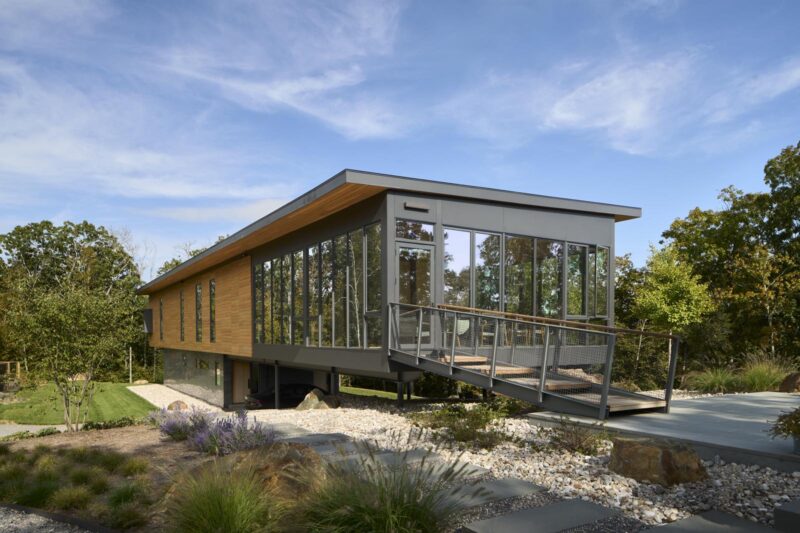
The clients sought a home design that incorporated bold cantilevers and a “floating” quality; a residence that was modern in its execution but also had the natural textures and warmth of a remote mountain retreat. This vision had to be reconciled with a disciplined budget. Our response was to design an “upside-down” house that used the topography to its advantage, and incorporated texture and warmth through the strategic use of natural stone and wood throughout.
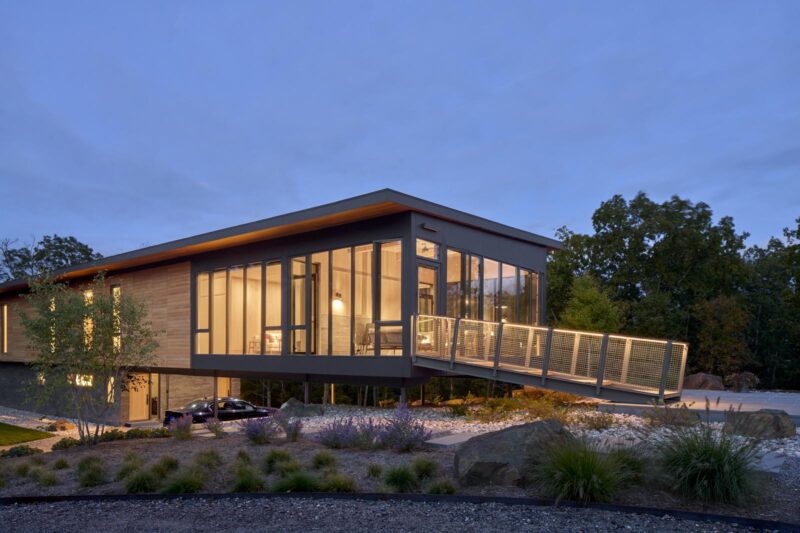
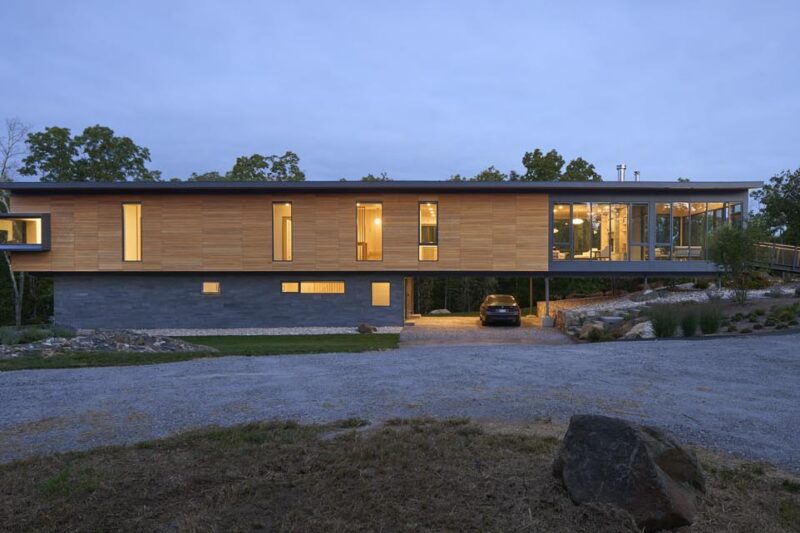
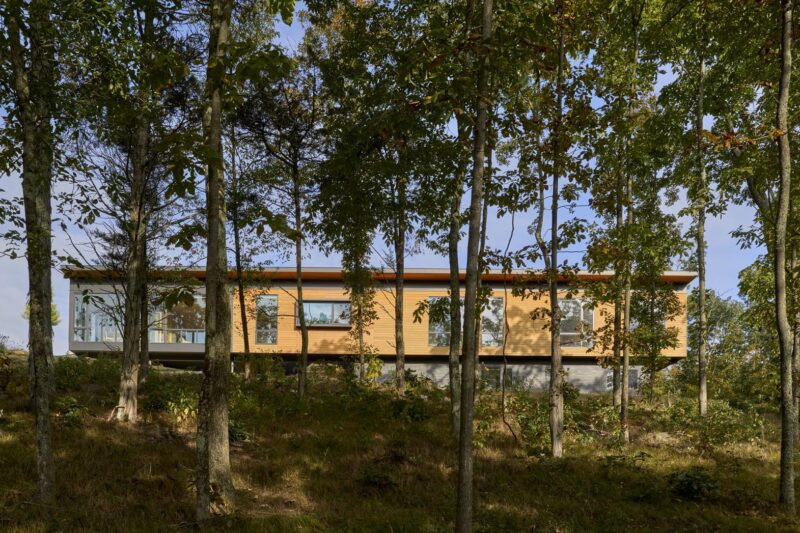
We organized the program into two distinct volumes. The smaller guest wing is nestled into the slope, clad in dark lava stone to allow it to recede into the shadows of the ridge. The primary living wing—a long, cedar-clad volume—spans across the landscape, supported by the guest wing on one side and the granite outcrop on the other. This “bridge” configuration achieved the floating effect the clients desired while creating a practical, sheltered parking area beneath the span, eliminating the cost and footprint of a detached garage.
To maintain budgetary efficiency, we focused on a simple, extruded form. This allowed us to utilize repetitive, prefabricated structural elements, ensuring that the architectural expression remained clean and the engineering stayed within a manageable scope.
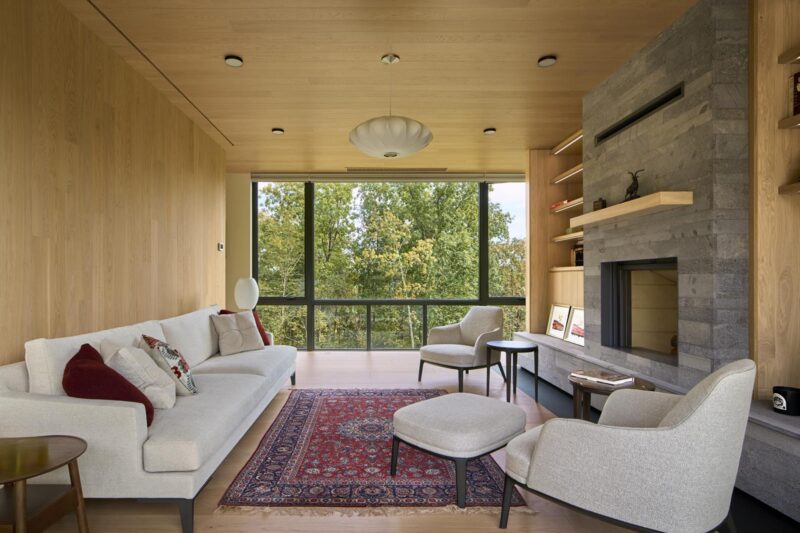
Our primary goal for the interior was to create a continuous connection to the outdoors. The layout is arranged so that from almost any vantage point, one can see through the house to the forest beyond. Because the main wing is elevated, the views are not of the forest floor, but of the tree canopy and the views beyond during the winter months. This creates a unique sense of immersion within the surrounding landscape.
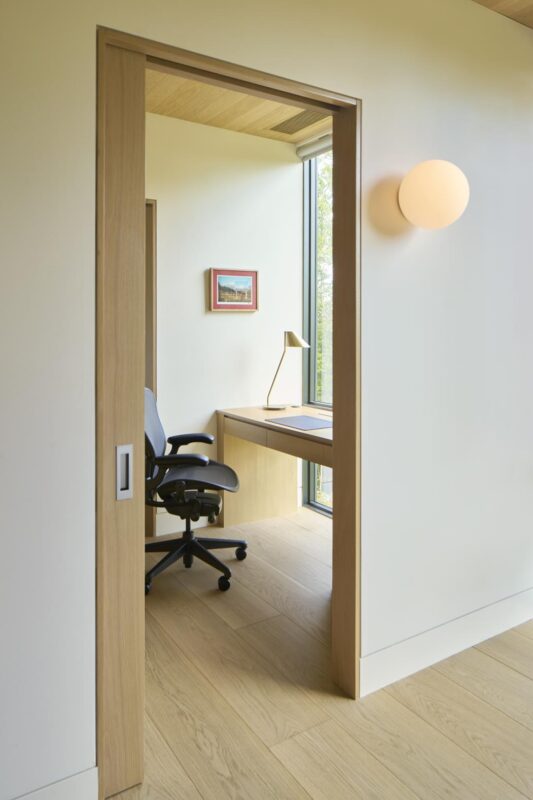
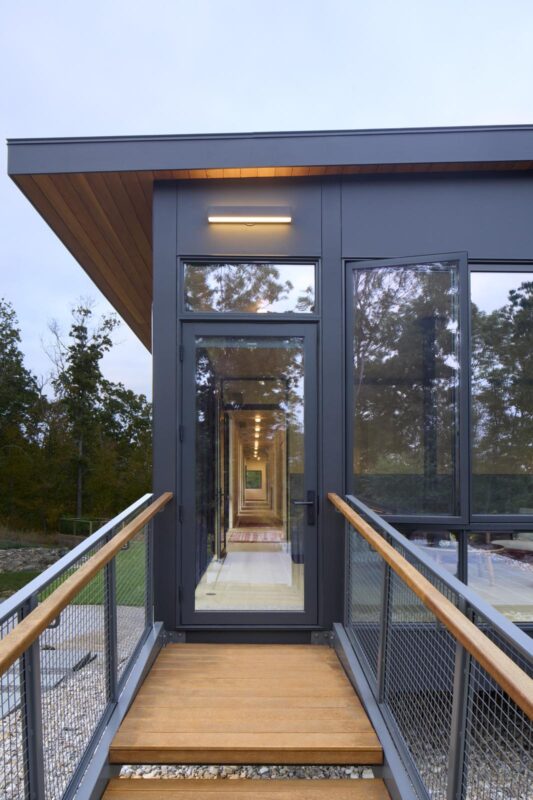
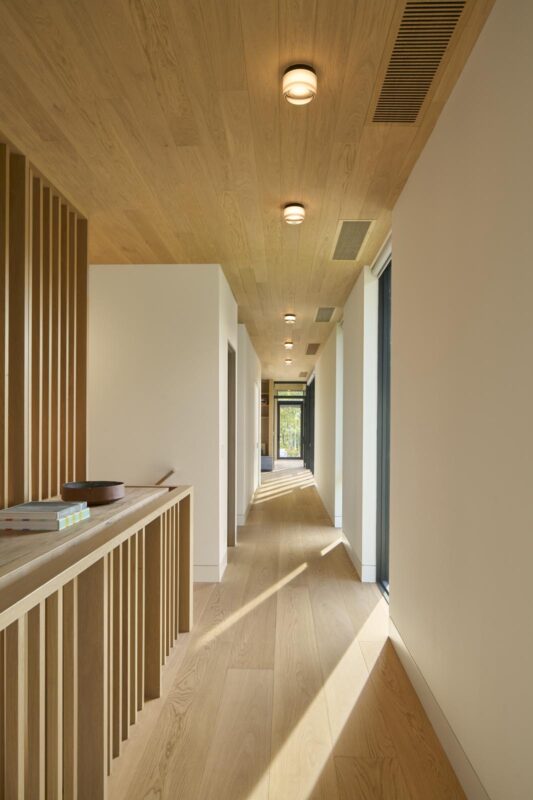
The interior choreography centers on a monumental hallway that connects the various living zones. More than a utilitarian passage, we designed this corridor as a rhythmic experience. Windows are placed strategically along its length to break down the scale of the hallway and create a shifting play of light throughout the day. At the center of the plan, the hallway is interrupted by a stairwell that brings natural light deep into the core of the house and down to the guest level.
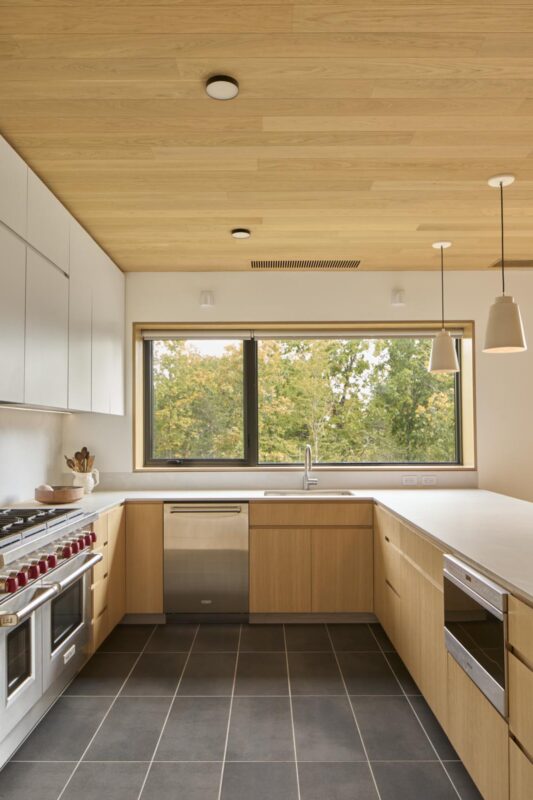
For the material palette, we chose Belgian White Oak for the floors, ceilings, and select wall surfaces. The strategic use of wood provides the tactile warmth the clients requested and creates a unified, quiet backdrop for their collection of vintage rugs and artwork gathered from their global travels.
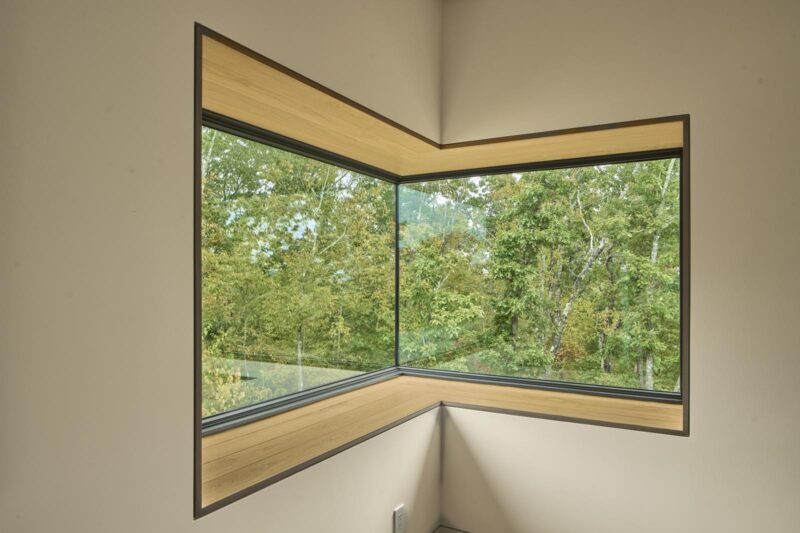
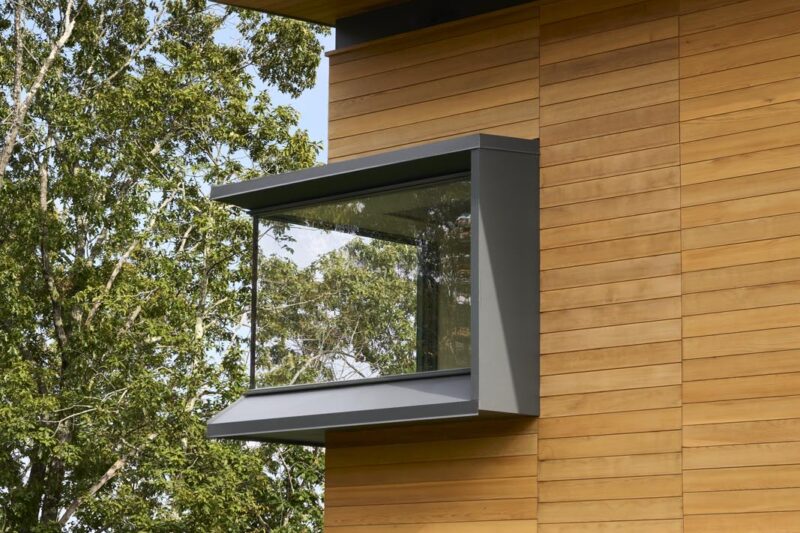
A notable part of our collaboration involved designing for the clients’ pets. They were deeply connected to their two cats, and it was important that the home serve as a safe and engaging sanctuary for them. We ensured that all windows either extended to the floor or featured deep, intentional perching ledges. These “observation decks” allow the cats to stay safely indoors while maintaining a constant visual connection to the movements of the birds and the changing seasons in the trees outside.
The plan also prioritizes long-term accessibility, a concept we discussed at length during the design phase. By locating the kitchen, dining, living areas, and the primary suite on a single floor with its own direct exterior entrance, we ensured the home is fully optimized for aging-in-place.
The southern end of the house is capped a gracious 4-season sunroom, positioned to capture the light of both sunrise and sunset. This space opens onto an outdoor sundeck, which is connected to the main entrance by a slender steel bridge.
The Sharon Mountain House is the result of a highly collaborative process. By balancing the clients’ structural ambitions with a pragmatic approach to form and material, we were able to create a residence that feels both technically precise and deeply connected to the Litchfield Hills. It is a home designed to endure, providing a sanctuary for its inhabitants—human and animal alike—for years to come.
Photography by Michael Biondo
We organized the program into two distinct volumes. The smaller guest wing is nestled into the slope, clad in dark lava stone to allow it to recede into the shadows of the ridge. The primary living wing—a long, cedar-clad volume—spans across the landscape, supported by the guest wing on one side and the granite outcrop on the other. This “bridge” configuration achieved the floating effect the clients desired...
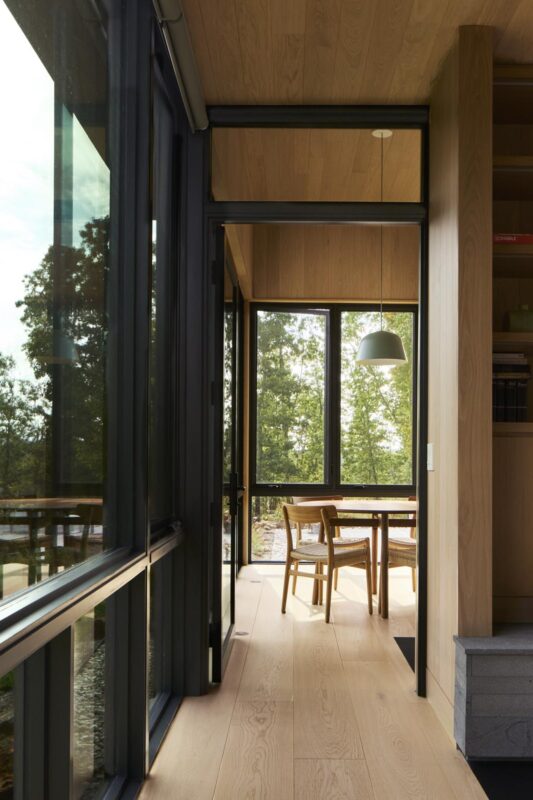
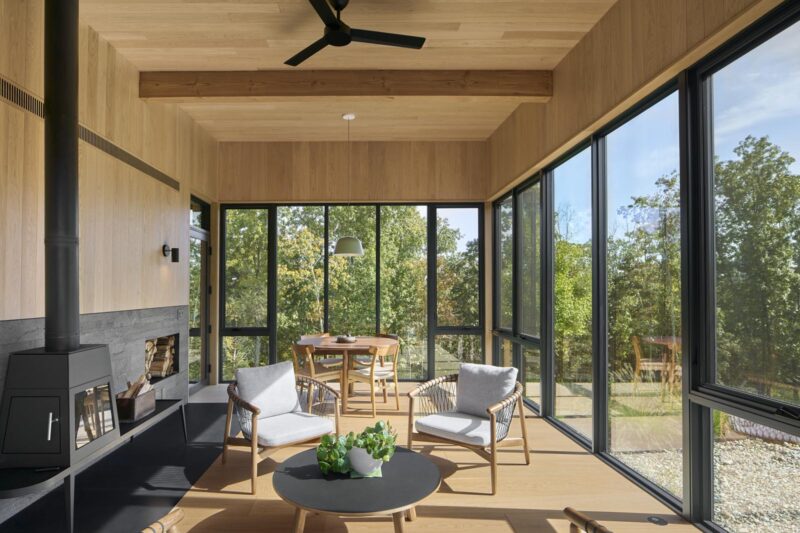
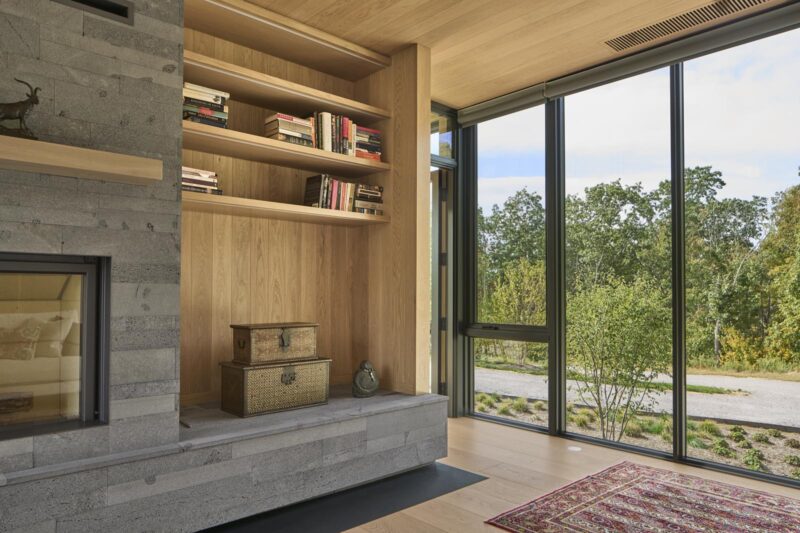
Our primary goal for the interior was to create a continuous connection to the outdoors. The layout is arranged so that from almost any vantage point, one can see through the house to the forest beyond. Because the main wing is elevated, the views are not of the forest floor, but of the tree canopy and the views beyond during the winter months. This creates a unique sense of immersion within the surrounding landscape.
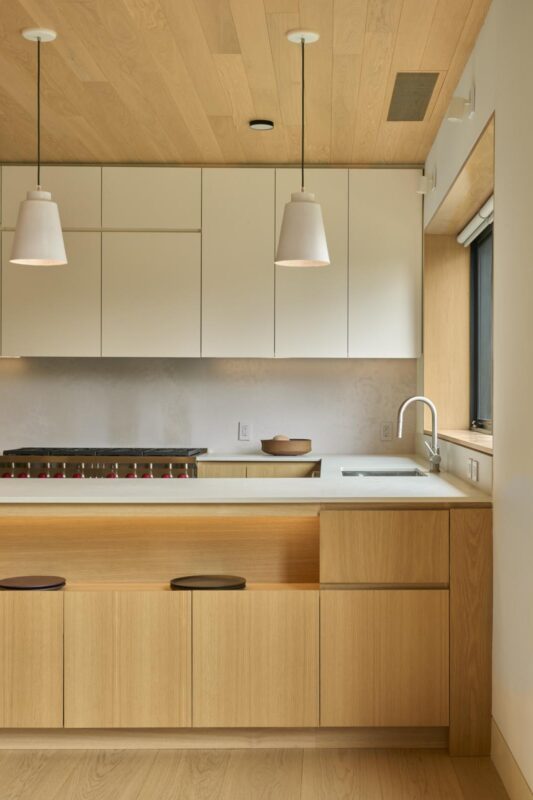


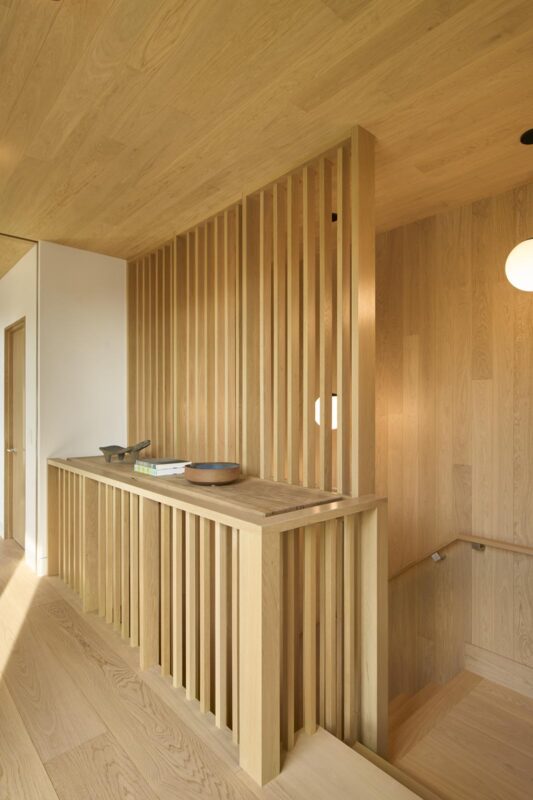
A notable part of our collaboration involved designing for the clients’ pets. They were deeply connected to their two cats, and it was important that the home serve as a safe and engaging sanctuary for them. We ensured that all windows either extended to the floor or featured deep, intentional perching ledges. These "observation decks" allow the cats to stay safely indoors while maintaining a constant visual connection to the movements of the birds and the changing seasons in the trees outside.